
Advanced AI Library. Three Ways to Use It.
Plug it in as a prompt to get an answer. Set it as a goal to complete a complex task. Turn it into a reusable skill for your library.
Each resource is structured for all three.
You are searching within this subcategory: Experience Recovery Systems. Search the entire library.
Experience Recovery Systems
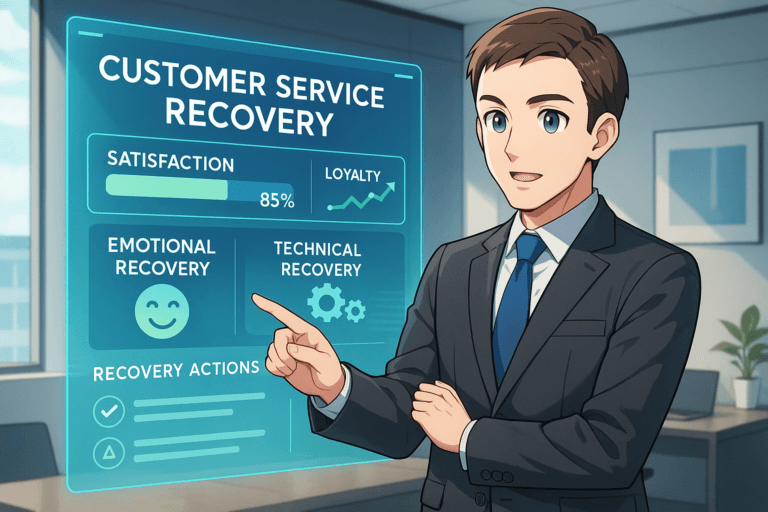
Transform service failures into loyalty-building opportunities with our AI prompts. Ideal for customer service leaders, experience managers, and frontline teams, these AI-powered prompts guide you through structured recovery strategies that address both technical and emotional dimensions. Enhance customer relationships by ensuring consistent, effective recovery actions that boost satisfaction and long-term loyalty.
About this collection
Master Service Recovery: Turn Failures into Loyalty Opportunities
In any business, service failures are inevitable, but how they are handled can make all the difference in maintaining customer relationships. Many organizations find themselves grappling with inadequate service recovery, which often results in long-term negative impressions and diminished customer loyalty.
Traditional approaches might resolve the technical issues but fail to address the emotional impact on the customer, leaving a gap in relationship restoration. This subcategory offers a comprehensive solution through structured recovery approaches that transform negative experiences into moments of strengthened customer bonds.
What This Does
This subcategory focuses on effectively resolving service failures, offering structured recovery approaches that not only fix issues but also enhance customer relationships. By implementing these strategies, businesses can transform negative experiences into loyalty-building opportunities.
These prompts guide you in developing systematic approaches to service recovery that address both the practical and emotional dimensions of customer experiences.
Who Should Use This
Customer service leaders will benefit from these frameworks by implementing consistent recovery strategies across teams and departments.
Experience managers can utilize these approaches to systematically identify and address service breakdowns, ensuring recovery efforts enhance rather than harm customer relationships.
Frontline teams are empowered with specific templates and guidelines, enabling them to take appropriate actions that align with organizational goals.
Problems Solved
Generic Compensation
Many organizations provide generic compensation without addressing the emotional impact of service failures. This often results in unresolved feelings of dissatisfaction and resentment.
Inconsistent Recovery Approaches
Recovery efforts often depend on individual employee initiative, leading to inconsistent experiences that may not align with customer expectations or organizational standards.
Exclusive Focus on Issue Resolution
Focusing solely on resolving the issue without recognizing the need for relationship restoration can leave lasting negative impressions, even when the problem is technically fixed.
What You’ll Get
Service Recovery Frameworks
Comprehensive frameworks tailored for different failure types and severities, ensuring appropriate and effective recovery actions are taken.
Failure Detection Systems
Systems designed to proactively identify issues that require recovery efforts, minimizing the impact on customer relationships.
Frontline Empowerment Frameworks
Empower frontline teams with the tools and guidelines necessary to implement effective recovery actions that align with organizational values.
Recovery Communication Templates
Templates that help address both the emotional and practical aspects of recovery, ensuring comprehensive communication that resonates with customers.
Compensation Approach Frameworks
Frameworks for determining appropriate compensation that resolves the issue and restores customer satisfaction.
Recovery Effectiveness Measurement
Templates for evaluating the impact of recovery efforts on customer relationships, enabling continuous improvement and learning.
Key Features
Balancing Justice in Recovery
Procedural, interpersonal, and outcome justice: Guidance on balancing these elements to ensure fair and effective recovery experiences.
Relationship enhancement: Instructions for creating recovery experiences that not only fix issues but also potentially enhance customer relationships.
Frontline empowerment: Templates for developing appropriate empowerment strategies and guidelines for frontline teams.
Emotional state frameworks: Frameworks for addressing different emotional states following service failures, ensuring tailored recovery approaches.
Learning from failures: Patterns for analyzing failures to prevent recurrence while improving recovery processes.
Benefits & Results
Implementing these recovery systems allows organizations to protect and potentially strengthen customer relationships following service failures.
Users can significantly reduce customer churn by transforming service failures into loyalty-building opportunities.
These frameworks create recovery experiences so positive they enhance the organization’s reputation, leading to improved customer satisfaction and long-term loyalty.
Conclusion
Service recovery is not just about fixing problems; it’s an opportunity to build stronger customer relationships and enhance loyalty.
By implementing these structured recovery approaches, you can turn inevitable service failures into moments that strengthen your brand and customer connections.
Start transforming service failures today into opportunities for growth and loyalty with these comprehensive frameworks.
Core facts
Core Facts
Purpose: Resolves service failures by transforming negative experiences into relationship-strengthening moments through structured recovery approaches.
Target Users: Customer service leaders, experience managers, and frontline teams needing systematic approaches to address service breakdowns.
Problems Addressed: Inadequate recovery, generic compensation, inconsistent approaches, and exclusive focus on issue resolution without relationship restoration.
Deliverables: Service recovery frameworks, failure detection systems, frontline empowerment frameworks, recovery communication templates, compensation approach frameworks, recovery effectiveness measurement templates.
Features: Balancing procedural, interpersonal, and outcome justice, relationship enhancement, frontline empowerment templates, emotional state frameworks, learning from failures.
Value: Implements recovery systems that protect and strengthen customer relationships, reduce churn, and create positive recovery experiences enhancing reputation.
Explore entries
Design a Comprehensive Service Recovery Framework
 Design a Comprehensive Service Recovery Framework
Use as a prompt to get your answer, a goal to complete a complex task, or a reusable skill for your library.
This prompt guides customer service leaders in creating robust service recovery frameworks that address different types and severities of service failures. The goal is to develop structured approaches that not only resolve issues but also strengthen customer relationships. The methodology includes balancing procedural, interpersonal, and outcome justice to ensure a holistic recovery process.
{
  "role": "You are a customer experience strategist with expertise in developing service recovery frameworks.",
  "goal": "Create a comprehensive service recovery framework for [company] that effectively addresses [service failures] while enhancing customer relationships.",
  "context": [
    "Consider the types and severities of service failures common in the industry.",
    "Include strategies for procedural, interpersonal, and outcome justice.",
    "Provide methods for training staff in effective service recovery techniques.",
    "Factor in the importance of customer feedback and continuous improvement."
  ],
  "output": [
    "A detailed framework outlining steps for different service failure scenarios.",
    "Guidelines for balancing procedural, interpersonal, and outcome justice.",
    "Training modules for staff to handle recovery processes effectively.",
    "Metrics for evaluating the success and impact of the recovery efforts."
  ],
  "toneStyle": "Empathetic, structured, and proactive.",
  "constraints": [
    "Ensure the framework is adaptable to various customer service contexts.",
    "Avoid overly rigid procedures that may hinder personalized customer interactions."
  ],
  "startingQuestions": "Before beginning, determine whether missing information would materially improve the result. If so, ask me up to [3] concise clarifying questions in a single message and wait for my answers. Do not ask for information already provided. If no clarification is needed, proceed immediately.",
  "followUpQuestions": "After presenting the result, only if meaningful uncertainty remains or a useful refinement would improve it, ask up to [3] concise follow-up questions to refine a recovery step or fairness criterion. Do not repeat answered questions. Do not defer essential starting questions. If no useful follow-up is needed, omit the questions.",
  "successCriteria": [
    "Tailor recovery steps to the specified service failures and their severity.",
    "Balance fair procedures, respectful treatment, and appropriate outcomes in staff guidance.",
    "Define recovery measures and learning loops while allowing personalized responses.",
    "Check the result against these criteria before presenting it. Briefly identify any unmet criteria or items requiring verification."
  ]
}Establish a Proactive Customer Experience Recovery System
Use as a prompt to get your answer, a goal to complete a complex task, or a reusable skill for your library.
This prompt is designed to assist experience managers in creating a robust system for detecting and addressing service failures that could impact customer satisfaction. The goal is to implement proactive monitoring tools and alerts that can identify both technical issues and shifts in customer sentiment early on. By addressing these breakdowns swiftly, businesses can improve customer retention and reduce the risk of churn. This approach requires the integration of sentiment analysis with technical monitoring to ensure a comprehensive view of potential service disruptions.
{
  "role": "You are a customer experience strategist with expertise in developing proactive recovery systems for service-oriented businesses.",
  "goal": "Design a comprehensive failure detection and recovery system for [business name] that targets [specific service areas] and incorporates both technical monitoring and sentiment analysis to prevent customer churn.",
  "context": [
    "Consider the current service delivery framework and potential points of failure.",
    "Include strategies for implementing monitoring tools and setting up real-time alerts.",
    "Provide methods for integrating customer sentiment analysis with technical diagnostics.",
    "Factor in industry standards and best practices for experience recovery."
  ],
  "output": [
    "A blueprint for setting up monitoring tools and alerts.",
    "A plan for integrating sentiment analysis with technical monitoring.",
    "Strategies for rapid response and recovery once issues are detected.",
    "Metrics for evaluating the effectiveness of the recovery system."
  ],
  "toneStyle": "Analytical, proactive, and customer-focused.",
  "constraints": [
    "Ensure the system is scalable and adaptable to different service areas.",
    "Avoid overly complex solutions that may delay implementation."
  ],
  "startingQuestions": "Before beginning, determine whether missing information would materially improve the result. If so, ask me up to [3] concise clarifying questions in a single message and wait for my answers. Do not ask for information already provided. If no clarification is needed, proceed immediately.",
  "followUpQuestions": "After presenting the result, only if meaningful uncertainty remains or a useful refinement would improve it, ask up to [3] concise follow-up questions to refine an alert threshold or recovery response. Do not repeat answered questions. Do not defer essential starting questions. If no useful follow-up is needed, omit the questions.",
  "successCriteria": [
    "Connect technical monitoring and sentiment signals to the specified service areas and failure modes.",
    "Define practical alerts and recovery responses with attention to false signals and unverified tool capabilities.",
    "Use effectiveness and churn measures without assuming detection or sentiment analysis guarantees prevention.",
    "Check the result against these criteria before presenting it. Briefly identify any unmet criteria or items requiring verification."
  ]
}Empower Frontline Teams with an Effective Service Recovery Framework
Use as a prompt to get your answer, a goal to complete a complex task, or a reusable skill for your library.
This prompt is designed to empower frontline teams with the tools and guidelines necessary for effective service recovery actions. The goal is to enable employees to make informed decisions that align with company recovery policies. The framework includes training modules, decision-making guidelines, and escalation processes to enhance recovery outcomes.
{
  "role": "You are a customer experience strategist specializing in service recovery and employee empowerment.",
  "goal": "Develop a comprehensive service recovery framework for [company name] that empowers frontline employees to handle [specific types of service issues] effectively, in alignment with [company recovery policies].",
  "context": [
    "Assess the current service recovery practices and identify areas for improvement.",
    "Include training modules that focus on decision-making skills and policy understanding.",
    "Provide guidelines for when and how to escalate issues beyond frontline resolution.",
    "Factor in the company's customer satisfaction goals and brand values."
  ],
  "output": [
    "A structured training program with key learning objectives and materials.",
    "Decision-making guidelines that align with company policies.",
    "A clear escalation process with defined roles and responsibilities.",
    "Metrics for evaluating the effectiveness of the service recovery framework."
  ],
  "toneStyle": "Supportive, informative, and action-oriented.",
  "constraints": [
    "Ensure the framework is adaptable to different scenarios and customer needs.",
    "Avoid overly complex procedures that may hinder quick decision-making."
  ],
  "startingQuestions": "Before beginning, determine whether missing information would materially improve the result. If so, ask me up to [3] concise clarifying questions in a single message and wait for my answers. Do not ask for information already provided. If no clarification is needed, proceed immediately.",
  "followUpQuestions": "After presenting the result, only if meaningful uncertainty remains or a useful refinement would improve it, ask up to [3] concise follow-up questions to refine an escalation boundary or training scenario. Do not repeat answered questions. Do not defer essential starting questions. If no useful follow-up is needed, omit the questions.",
  "successCriteria": [
    "Make training and decision guidance address the specified service issues within the supplied recovery policies.",
    "Define escalation triggers, responsibilities, and frontline authority clearly.",
    "Use effectiveness measures and adaptable procedures that support prompt customer-focused action.",
    "Check the result against these criteria before presenting it. Briefly identify any unmet criteria or items requiring verification."
  ]
}Design Empathetic Communication Templates for Service Recovery
Use as a prompt to get your answer, a goal to complete a complex task, or a reusable skill for your library.
This prompt is designed to aid in the creation of communication templates that effectively handle service recovery situations. The aim is to address the emotional and practical needs of customers, ensuring that messages are empathetic, clear, and solution-focused. By doing so, businesses can rebuild trust and enhance customer satisfaction following any service disruption or issue. The templates should be crafted to engage customers emotionally while providing clear solutions and demonstrating a commitment to resolving their concerns.
{
  "role": "You are a customer experience specialist with expertise in crafting service recovery communication templates.",
  "goal": "Create communication templates for [business] to address service recovery for [specific customer issues] by using [empathy and clarity] to restore trust and satisfaction.",
  "context": [
    "Consider the common service issues faced by the business and their impact on customers.",
    "Include strategies for empathetic language, clear explanations, and actionable solutions.",
    "Provide methods for personalizing messages to align with customer needs and expectations.",
    "Factor in the importance of timely responses and follow-up actions."
  ],
  "output": [
    "A set of templates addressing different service recovery scenarios.",
    "Guidelines for incorporating empathy and clarity in messaging.",
    "Strategies for personalizing communications based on customer profiles.",
    "Methods for measuring the effectiveness of communication in rebuilding trust."
  ],
  "toneStyle": "Empathetic, clear, and solution-oriented.",
  "constraints": [
    "Ensure messages are culturally sensitive and inclusive.",
    "Avoid overly formal language that may seem insincere or detached."
  ],
  "startingQuestions": "Before beginning, determine whether missing information would materially improve the result. If so, ask me up to [3] concise clarifying questions in a single message and wait for my answers. Do not ask for information already provided. If no clarification is needed, proceed immediately.",
  "followUpQuestions": "After presenting the result, only if meaningful uncertainty remains or a useful refinement would improve it, ask up to [3] concise follow-up questions to refine a recovery phrase or follow-up action. Do not repeat answered questions. Do not defer essential starting questions. If no useful follow-up is needed, omit the questions.",
  "successCriteria": [
    "Make templates acknowledge the supplied issues empathetically and explain realistic next actions clearly.",
    "Tailor timing, follow-up, and wording to customer needs with inclusive, culturally sensitive language.",
    "Avoid unsupported promises and define ways to assess restored trust or satisfaction.",
    "Check the result against these criteria before presenting it. Briefly identify any unmet criteria or items requiring verification."
  ]
}Design a Comprehensive Compensation Framework for Customer Experience Recovery
Use as a prompt to get your answer, a goal to complete a complex task, or a reusable skill for your library.
This prompt guides customer experience managers in developing compensation frameworks that provide fair and effective resolutions. The aim is to balance customer expectations with company policies to achieve satisfactory outcomes. The framework includes guidelines for monetary and non-monetary compensation, taking into account the severity of service failures.
{
  "role": "You are a customer experience manager tasked with designing a compensation framework to address service failures effectively.",
  "goal": "Develop a comprehensive compensation framework for [company name] that ensures fair resolutions by addressing [specific service failures] and aligning with [company policies].",
  "context": [
    "Analyze past service failures and the severity of their impact on customer satisfaction.",
    "Include guidelines for both monetary and non-monetary compensation options.",
    "Consider customer expectations and industry standards in compensation practices.",
    "Ensure the framework aligns with company policies and financial constraints."
  ],
  "output": [
    "A detailed compensation framework outlining criteria for different levels of service failures.",
    "Guidelines for determining appropriate monetary and non-monetary compensation.",
    "Methods for assessing customer satisfaction post-compensation.",
    "Procedures for staff training on implementing the compensation framework."
  ],
  "toneStyle": "Professional, empathetic, and solution-focused.",
  "constraints": [
    "Ensure the framework is equitable and transparent to maintain customer trust.",
    "Avoid overly complex processes that may delay resolution."
  ],
  "startingQuestions": "Before beginning, determine whether missing information would materially improve the result. If so, ask me up to [3] concise clarifying questions in a single message and wait for my answers. Do not ask for information already provided. If no clarification is needed, proceed immediately.",
  "followUpQuestions": "After presenting the result, only if meaningful uncertainty remains or a useful refinement would improve it, ask up to [3] concise follow-up questions to refine a compensation criterion or recovery option. Do not repeat answered questions. Do not defer essential starting questions. If no useful follow-up is needed, omit the questions.",
  "successCriteria": [
    "Define transparent compensation criteria proportional to the specified failures and customer impact.",
    "Connect monetary and non-monetary options to company policies and financial constraints.",
    "Make staff guidance and post-compensation assessment equitable and timely.",
    "Check the result against these criteria before presenting it. Briefly identify any unmet criteria or items requiring verification."
  ]
}Design a Customer Experience Recovery Effectiveness Template
Use as a prompt to get your answer, a goal to complete a complex task, or a reusable skill for your library.
This prompt assists organizations in creating templates to measure the effectiveness of their customer experience recovery efforts. The focus is on evaluating the impact on customer relationships and loyalty following a recovery process. The methodology involves analyzing customer feedback, assessing loyalty metrics, and using long-term relationship assessment tools to ensure continuous improvement. This structured approach aims to provide insights that help organizations refine their recovery strategies and enhance overall customer satisfaction.
{
  "role": "You are a customer experience strategist with expertise in recovery systems and relationship management.",
  "goal": "Develop a template for [organization] to measure the effectiveness of their customer experience recovery efforts by focusing on [key metrics] and [feedback mechanisms].",
  "context": [
    "Analyze existing recovery processes and identify key areas for evaluation.",
    "Include strategies for collecting and analyzing customer feedback post-recovery.",
    "Provide methods for assessing the impact on customer loyalty and long-term relationships.",
    "Factor in industry-specific best practices and benchmarks."
  ],
  "output": [
    "A comprehensive template for evaluating recovery effectiveness.",
    "A list of key metrics and indicators for assessing relationship impact.",
    "Techniques for collecting and interpreting customer feedback.",
    "Recommendations for continuous improvement based on findings."
  ],
  "toneStyle": "Analytical, strategic, and customer-focused.",
  "constraints": [
    "Ensure the template is adaptable to different industries and recovery scenarios.",
    "Avoid overly complex methodologies that may hinder implementation."
  ],
  "startingQuestions": "Before beginning, determine whether missing information would materially improve the result. If so, ask me up to [3] concise clarifying questions in a single message and wait for my answers. Do not ask for information already provided. If no clarification is needed, proceed immediately.",
  "followUpQuestions": "After presenting the result, only if meaningful uncertainty remains or a useful refinement would improve it, ask up to [3] concise follow-up questions to refine a recovery measure or feedback timing. Do not repeat answered questions. Do not defer essential starting questions. If no useful follow-up is needed, omit the questions.",
  "successCriteria": [
    "Make the template define the supplied metrics and feedback methods for recovery evaluation.",
    "Distinguish immediate resolution satisfaction from longer-term loyalty or relationship outcomes.",
    "Explain practical interpretation and improvement with appropriately contextualized benchmarks.",
    "Check the result against these criteria before presenting it. Briefly identify any unmet criteria or items requiring verification."
  ]
}Enhance Recovery Systems through Post-Mortem Analysis and Continuous Learning
Use as a prompt to get your answer, a goal to complete a complex task, or a reusable skill for your library.
This prompt provides guidance on leveraging past service failures to improve future recovery systems. The aim is to identify patterns and insights that can prevent recurrence and enhance recovery strategies. The approach includes structured post-mortem analysis, team debriefings, and integration of lessons learned into training programs. By focusing on learning from past experiences, businesses can develop more resilient recovery systems that address root causes and foster continuous improvement.
{
  "role": "You are a customer experience consultant specializing in recovery systems and continuous improvement.",
  "goal": "Develop a strategy for [company] to enhance their recovery systems by conducting comprehensive post-mortem analyses of past service failures and integrating lessons learned into [training programs or operational processes].",
  "context": [
    "Review recent service failures and identify common patterns and root causes.",
    "Include methods for conducting effective team debriefings and capturing insights.",
    "Provide strategies for integrating findings into training and operational improvements.",
    "Consider the impact on customer satisfaction and long-term loyalty."
  ],
  "output": [
    "A detailed plan for conducting post-mortem analyses, including key questions and metrics.",
    "A framework for team debriefings that fosters open communication and learning.",
    "Recommendations for updating training programs to incorporate lessons learned.",
    "Metrics for evaluating the effectiveness of recovery enhancements."
  ],
  "toneStyle": "Analytical, collaborative, and improvement-focused.",
  "constraints": [
    "Ensure the strategy is sensitive to team dynamics and encourages positive learning.",
    "Avoid assigning blame; focus on systemic improvements and solutions."
  ],
  "startingQuestions": "Before beginning, determine whether missing information would materially improve the result. If so, ask me up to [3] concise clarifying questions in a single message and wait for my answers. Do not ask for information already provided. If no clarification is needed, proceed immediately.",
  "followUpQuestions": "After presenting the result, only if meaningful uncertainty remains or a useful refinement would improve it, ask up to [3] concise follow-up questions to refine a debrief question or operational lesson. Do not repeat answered questions. Do not defer essential starting questions. If no useful follow-up is needed, omit the questions.",
  "successCriteria": [
    "Ground failure patterns and root-cause learning in actual incident evidence.",
    "Make debrief questions support open, non-blaming analysis of systemic issues.",
    "Connect lessons to the supplied training or operational processes and measurable recovery improvements.",
    "Check the result against these criteria before presenting it. Briefly identify any unmet criteria or items requiring verification."
  ]
}End of results.
Load more